Mind-body Medicine

THE YEAR OF YES, EP. 13: YES TO BEING YOU

Ep13.jpeg

“Today you are You, that is truer than true. There is no one alive who is Youer than You.”

— Dr. Seuss

This alien lives next door to me. An alien is a foreigner. I often wonder how many people feel like an alien in this world because they “look different,” “act different,” or dare to be different? I certainly have.

The pressures to conform in life are immense. They come from everywhere, all of the time. From the moment our moms know they’re pregnant, people start asking, boy or girl? The ball keeps rolling from there. Society, school, corporate America, social media, the workplace all urge us to fit inside neat boxes and categories.

It sometimes feels easier to try to fit in rather than to be who you really are, opening yourself up to vulnerability. But take a moment and think about it, at the end of the day, where does that leave you?

I’ve personally never “fit in,” but don’t think that means I didn’t try damn hard as a kid. I’m a brown-skinned human who was born and raised in the lily-white suburbs of Houston and Dallas, Texas by first generation Indian parents. It's no accident that I preferentially went by my middle name Amy for 20 years, a name I asked my parents to legally change for me (from my dad's first name, an Indian custom) when I was a wee five year old kid. I wasted a lot of energy trying to be something I was not.

I’ve been called “weird” more times in my life than I can count. When everyone was listening to the Spice Girls and country music in high school, I was into the Flaming Lips. Though I was pre-med in college, instead of majoring in science, I took the winding road of philosophy, anthropology and art history. I’ve taken the path of Integrative Medicine, which is certainly not the norm in our drug-and-surgery fixated healthcare system.

My experiences will never be the same as yours, even if we share similar struggles, communities, or even parents. That is what makes each of us one-of-a-kind. What I have realized is the very things that make me me, the parts of me that I had so much trouble accepting as a young person, are actually what make me see the world, my work, and problems in creative, innovative ways. I started learning more about the world's great scientistsartistseducatorsinnovators and peace makers - none of whom took the "safe" road. These amazing human stories have been a source of solace and strength.

I've learned that being who you are is an immense act of courage. And that is truly a magnificent thing. The norm is ordinary. It’s boring. It's stale. It's mediocrity. Dare to be you!

By working on accepting and being the unique creature you are, with the specific skill set that only you possess - and not judging yourself in the process (that's another hard one, I know!) - a new openness emerges, the path of your heart. And if we all started opening our hearts a little more, can you imagine what a better place this world would be?

So let's celebrate your differences and mine. HELL YES!

THE YEAR OF YES, EP. 8: YES TO MINDFUL SHOWERING.

Photo credit: Markus Spiske

Photo credit: Markus Spiske

You may be rolling your eyes right now. Like, what? Try to stay with me for a few minutes.

There’s usually only one time of day when you’re free of everything but yourself - no stuff, kids, pets, devices, other people - and that’s in the shower. What if you could take that precious alone time and make it even more special by adding a little meditation into your day?

I’ve been practicing mindful showering for a few weeks now and it’s become one of my favorite ways to practice mindfulness. Why? Because it’s a routine task during which we’re often lost in thought and don’t have much else to distract us.

Step-by-step instructions:

  1. Start with your “beginner’s mind” by just noticing what’s going on. Observe your actions - the removal of your clothing, pulling back on the curtain or shower door, turning on the water, finding the correct temperature. Take note of the water itself - its temperature, sound, wetness. Isn’t it quite the miracle that warm, clean water comes out of your faucet /shower head whenever you want it?

  2. Once in the shower, open your awareness to the feeling of the warm water on your body. Notice the pressure of the water flow, how does it feel? Hold the soap in your hands, notice how slick it gets, how it smells, how it feels on your skin. Feel the shampoo and how it foams up, feel the pressure of your fingers on your scalp.

  3. Every time your mind wanders off - and it will many times, perhaps to your to-do list, or the time (I’m in a rush!), or something that happened yesterday, or whatever else - bring it gently back to the present, to the physical sensations of the warm water on your body and the weight of your feet on the tub floor. Is there any place you can be but right here, right now?

  4. As you towel off, feel the towel's texture, how it soaks up the water, and how it gently scrubs your skin.

  5. Finally, observe the difference paying attention makes on this everyday experience you just had.

The practice of mindful showering (or eating, or brushing your teeth, or walking...) is not about thinking, but rather just about awareness of what's going on. On the outset, the practice may seem silly, even boring. However, the more you practice everyday activity mindfulness, the more your mind will start to notice the textures of life, the emotions that come up in your body, and the fact that your thoughts are just thoughts, and not reality. If you'd like to learn more, here is a good article about mindfulness practice for beginners

By practicing presence and mindful awareness in the shower, you can get your daily meditation dose in, and get your whole self clean - your body AND your mind. Pretty wonderful, no? ♡

THE YEAR OF YES, EP. 6: YES TO DIGITAL DETOXES, PART I

YofYep6 -Digital Detoxes.jpeg

This past weekend, I decided to go on a “digital detox.” But as many of us often do in life, I decided to go forth with this intention without much planning. So, it’s not surprising that I ran up against a lot of interesting hurdles.

For one, what does it really mean to digitally detox? In its purest form, it means going 100% device-free – completely switching off all smartphones, tablets, laptops, and computers for a specific length of time. For others, it could mean allowing for phone calls and text messages from family and friends, but staying off devices most of the time, the internet, social media and the like. 

I had a difficult time going fully device-free. I realized the book that I’m trying to finish (and finally had time to read!) is on an app on my iPad. I also always talk to my parents and brother on the weekend, and I didn’t warn them that I’d be unavailable (lest they thought I fell of the face of the Earth). A few friends also wanted to meet up for dinner, I hadn’t planned on what I’d do about connecting with them. Finally, I didn’t set up an email auto-reply for a few pending time-sensitive work issues. 

That being said, I intentionally stayed off my devices and the internet for a good percentage of the weekend. I was able to notice when I had an impulse to grab my phone to check on something - it was most certainly a practice in mindfulness. My time felt more spacious, and yet more deliberate.

I spent hours chilling with my honey, cooking, taking photos (with my digital SLR, doh!), having good conversation + laughing, dreaming about surfing this summer, and just being quiet. I also had the bandwidth to work on a few projects that have been awaiting my attention (read: have been procrastinating on), which was amazing. And, in the end, my head did feel clearer, rested, and recharged.

I am going to try for a true digital detox soon, this time with the necessary pre-planning. I am hoping to make it at least 24 hours, but hopefully for more, perhaps 48 or 72 hours. I'd also like to practice the semi-digital detox I did this weekend, mindfulness of devices if you will, more often, which requires less planning. If you’d like to learn more, read this great article about digital detoxes and some of the neuroscience behind it, or this interesting piece from the New York Times. 

So, all in all, I only dipped my toe in the digital detox pond this weekend, but next time I'm going to jump into the lake. To be continued... 

Hope you have a great week! 💚

THE YEAR OF YES, EP. 5: YES, LOOK UP!

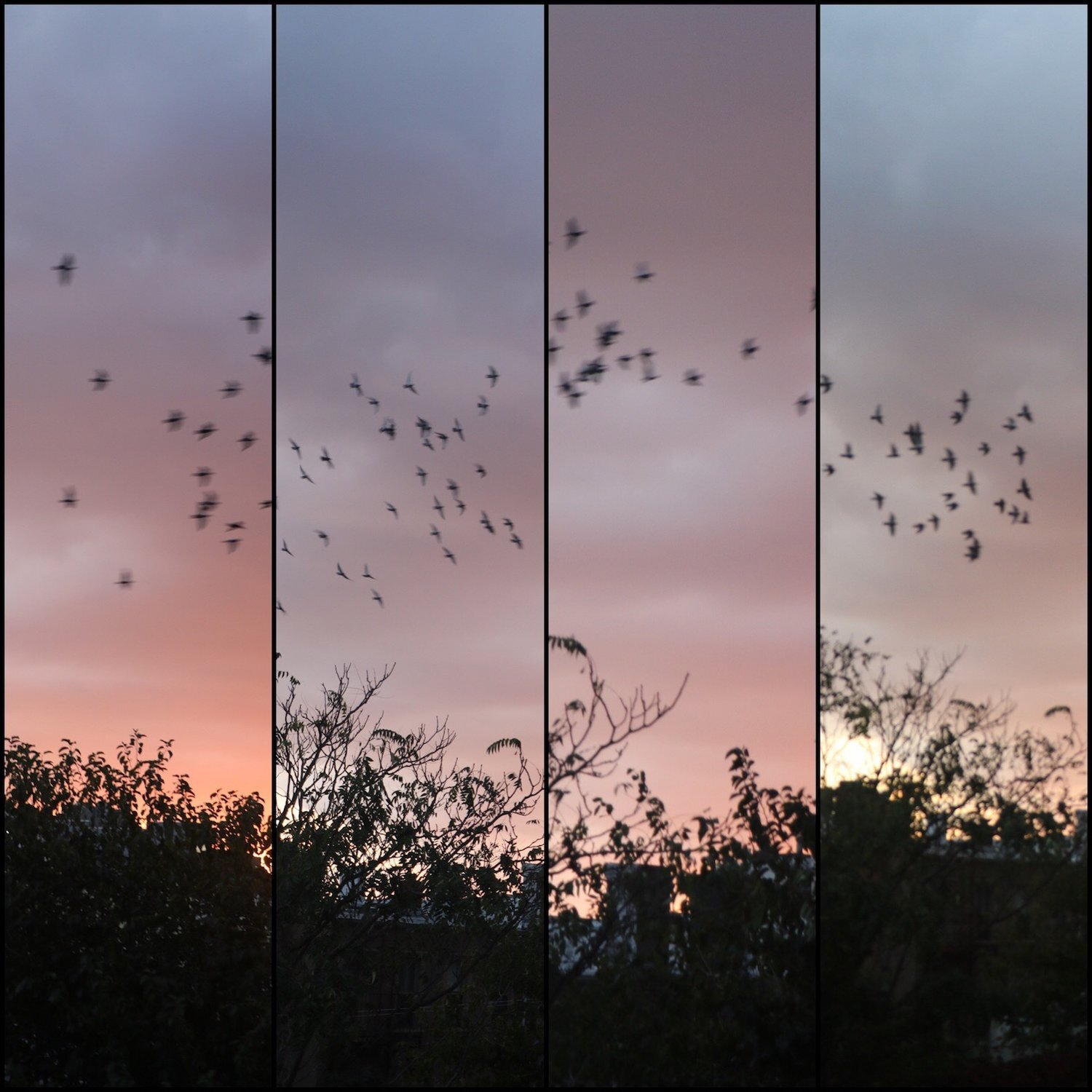
Looking up, outside my window at home in east williamsburg, brooklyn

Looking up, outside my window at home in east williamsburg, brooklyn

YES, look up. Sounds simple, doesn’t it? Like billions of others, I am guilty of standing in line, riding the subway, and walking to my next destination with my head down, cell phone in hand. But, why does it matter?

I’ve been considering the larger consequences of looking downward as much as we do - usually the result of using a digital device. 

✦ BODY: For one thing, there’s a major posture issue, physical therapists informally refer to this issue as “text neck”. A study from 2014 suggests that the pressure on your neck when looking down at a cell phone is the equivalent of placing the weight of a small child on it. Dr. Kenneth Hansraj, a New York based surgeon, writes in his paper, "as the head tilts forward the forces seen by the neck surges to 27 pounds at 15 degrees [all the way to] 60 pounds at 60 degrees," (see corresponding image here). In my own practice, I have seen countless patients with neck and upper back pain, often stemming from the same repetitive habits.

✦ MIND: Then there’s the problem of our focus and mental aptitude diminishing. A recent study at the University of Texas showed that your cognitive capacity is reduced when your smartphone is within eyeshot, even if it is turned off. What a bummer!

✦ CONNECTION: Finally, the lack of connection with others that we perpetuate when we’re always looking down is a real issue. A study from 2016 playfully named this act “phubbing,” a portmanteau of “phone” and “snubbing.” But, it's far from funny. The very devices that promise increased connectivity (hey look! I’ve got 7 gazillion friends on Facebook!) is actually getting in the way of genuine human interaction.

I’m by no means suggesting that digital devices are evil or should be banished in some way. But in this new era of everything digitized, perhaps we can start using our devices more thoughtfully.

So, take a break from your smartphone - quiet it completely, or better yet turn it off, and put it away out of eyesight. Then look up.

You may see the expanse of our ever-changing sky. Or a beautiful tree gracefully reaching up. Or the eyes of another human or animal, causing the compassion center of your brain to light up. 

Looking up connects us. It brings us into the everlasting present moment. It's life - you know, that thing happening here and now. 💛

THE YEAR OF YES, EP. 4: SAYING YES TO SOUNDER SLEEP BY DITCHING SCREENS & GOING ANALOG

Raise your hand if you have sleep troubles 🙋🏻  🙋🏾 . It's probably no surprise that using your phone, tablet or computer in the late evening can disrupt your sleep. What is surprising is how deeply it can affect you - your brain and your body. 

The use of screens at night suppress the production of the body's main sleep and circadian rhythm hormone, melatonin. In fact, the presence of any artificial light at night can potentially wreck your sleep cycle, but blue light has been proven to be the most disruptive. There is preliminary evidence that stifling melatonin production may even be linked to such concerning health issues as cancer and diabetes.

 The best answer to this problem is putting your phone away (and not near your bed) on true silent mode (often denoted by a crescent moon symbol) a few hours before bed. If that seems right near impossible, dimming your screen's brightness and putting it on nighttime mode, which will change the screen’s blue light to a softer pink, is less disruptive and a good idea.

However, even if your phone has the warmer screen tone, the content of what you’re ingesting can be just as insomnia-producing. Racing or anxious thoughts are commonplace among people who experience insomnia, myself included. These anxious thoughts can increase the amount of stress hormones running through your body (think: cortisol, adrenaline), which in turn will make it even harder to sleep. Using your phone right before bed, for games, email, social media … anything really … has the potential to exacerbate these fight-or-flight hormones causing sleep to be even more elusive.

The best answer here is analog reading, something not too exciting, especially by dim light. Doing this will focus your brain in a single direction, putting it in a more calm, passive mode, which will help you fall asleep.

Sleep tight tonight! Let me know how it goes! 😴

THE YEAR OF YES, EP. 3: SAYING YES TO ESTABLISHING A NEW HEALTHY HABIT WITH CLARITY AND KINDNESS

An example of healthy habit changes working, through objective evidence - labs.

An example of healthy habit changes working, through objective evidence - labs.

This past summer, I was given the diagnosis of pre-diabetes (a.k.a. glucose intolerance or insulin resistance) and hyperlipidemia (elevated cholesterol and triglycerides). I was shocked and dismayed - me, an integrative and family medicine physician, whose primary practice is *prevention* and who, of course, *knows better.* I was developing metabolic syndrome, a lifestyle-based disorder that increases one's risk of heart disease, stroke and diabetes. According to the American Heart Association, at least 47 million Americans have it.

For me, the new habit was a change toward healthier, #plantbased food choices. I also started a few herbs & minerals to support this change. I have been sticking to this new habit with discipline, but that of course, doesn't mean perfectly.

Perfection is not essential and not realistic when making any new change. We are human after all, and life from time to time can be completely unpredictable. MOST of the time is good enough. Take a look at the results in the photo above, truly remarkable!

When starting a new habit consciously, it's incredibly important to really get into the *WHY* you want/need to make this change. The healthy habits that stick the best and that are easiest to follow have a clear WHY attached to them.

Formed habits mean your choices and actions get to be on auto-pilot, freeing up mental space for other things - like creative thinking. A 2012 British Journal of General Practice article gives us some insight on the development of healthy habits.

"Habits are cognitively efficient, because the automation of common actions frees mental resources for other tasks... [habit formation] begins at the ‘initiation phase’, during which the new behavior and the context in which it will be done are selected. [Then] automaticity develops in the subsequent ‘learning phase' ... and culminates in the ‘stability phase’, at which the habit has formed and its strength has plateaued, so that it persists over time with minimal effort or deliberation."


Better food choices have become more habitual for me. However, once you begin a new healthy habit, know clearly there are going to be days you do it really well and days you miss/forget/falter. Be kind to yourself and have no fear! Tomorrow is always a new beginning.

Your inner critic will encourage you to fail and try hard to make you feel like a failure. Acknowledge your inner critic, say “hi” to it/her/him/them, and then tell it “I acknowledge this voice, but you're not real, this is not me, you don't actually exist." Then remember the WHY you are making the change that you are and begin again. I know this may sound a bit silly but it truly works! Try it!

And remember, life is nothing but a million new beginnings. 💚


The Year of Yes is a weekly photo-and-word installment by Dr. Shah written with the purpose of evoking hope, resilience, and a gentle movement toward healthy change in all of us.

THE YEAR OF YES, EP. 2: SAYING YES TO SOULFUL BEAUTY

Post-work out, no makeup selfie. Many thanks to Grass Roots Juicery in Williamsburg for the always-delectable plant-based bites and juices.

Post-work out, no makeup selfie. Many thanks to Grass Roots Juicery in Williamsburg for the always-delectable plant-based bites and juices.

Our minds are quite literally bombarded daily by ads promising all sorts of quick fixes. Scientists estimate that the average U.S. adult sees as many as 4,000 advertisements a day! If only you eat this / use this / do this / wear this, you’ll be heathy, beautiful, thin, model-esque, cool, perfect.

True beauty and health really does emerge from the inside, out - when your mind is on the peace path and compassion is your jam, you legitimately glow. Your kindness and gorgeous human energy reverberate right out of you. Over time, your skin, face, body actually change because the compassion reflects inside of you as much as it does to all others. Your eyes shine, your “flaws” soften, your sharp edges become smoother. It really is amazing.

Furthermore, science shows that things like high stress, anger, anxiety, and social isolation put you at higher risk for inflammatory conditions such as heart attacks. Compassion and meditation practices REALLY can help.

So the next time you have that urge to get that new thing that promises to make you amazing - pause for a moment, take a deep abdominal breath and then a few more. Ask yourself if this product really is going to be the magic quick fix answer it's promising to be. Ask yourself what your motivation is behind wanting it. Then say some loving words to yourself. And, finally, say a few more loving words to everyone else in this world. Watch what starts to happen!