THE YEAR OF YES, EP. 20: YES TO YOUR OWN RECIPE STASH.

my recipe stash.

my recipe stash.

I’m not sure about you, but I get food choice fatigue rather easily. I also love to eat delicious food. I get straight up bored with the tedium of figuring out what to eat on a daily basis that is:

a) healthful 

b) as whole foods-plant-based as possible (I’m no saint, but I do my very best)

c) in season + as local as possible 

d) rather quick and easy (unless it’s a weekend or special occasion). 

This is where my recipe box, folder, and pile of cookbooks come to the rescue!

Having a tangible (read: old school) method of diving into new/old food ideas is a savior for me. Yes, the internet is most amazing for a landslide of inspirational food ideas, but they don’t often follow the 4 food guidelines (a-d) I try to adhere to for optimal health, to fit within my own time constraints, & for environmental and ethical reasons.

I keep a recipe file folder that’s filled with everything from recipes I’ve discovered, made & tweaked to recipes friends have graciously shared (thanks Kel & Sally!) to weird concoctions I’ve created that turned out delicious. 

Then there’s my mom’s bible of Indian home cooking filed away in a plain manila folder. Don't let the bland cover fool you ... it is worth many times its weight in gold. My mom doesn't cook with measuring cups and my brother and I are not so talented at the "throw it all together" method of cooking. And so my brother kindly measured everything out and put this humble but incredible resource together.

And then there’s the cookbook pile - books full of gorgeous glossy photos and endless inspiration. I’ve tried to pare this collection down and have failed miserably. I just can’t get rid of any of them!! (Dear Marie Kondo: they all give me joy!)

Putting this post together and knowing my weekly CSA is coming in a few weeks has given me the inspiration to expand my horizons. From here on out, the Year of Yes installment for the week may be an executed recipe, including photo, ingredients & instructions. Yeah!

Happy Monday! 

The Year of Yes is a weekly photo-and-word installment by Dr. Shah written with the purpose of evoking hope, resilience, and a gentle movement toward healthy change in all of us.

THE YEAR OF YES, EP. 19: YES TO OUR HANDS

A reflection on hands. 

(& how grateful we ought to be.)


They tap.

They type.

They sign.

They scroll.

They freeze.

They warm.

They wave.

They flow.


They scratch.

They cut.

They rub.

They punch.

They clap.

They burn.

They pinch.

They snap.

They gesture.

They slap.


They touch.

They smudge.

They caress.

They print.

They grasp.

They grab.


They enter.

They push.

They wriggle.

They comb.

They poke.

They pick.


They bend.

They curve.

They vibrate.

They sleep.

They lock.

They hurt.


They swipe.

They read.

They write.

They draw.

They wear.

They feed.


They offer.

They feel.

They hold.

and

They heal.

🙌🏽 💛


The Year of Yes is a weekly photo-and-word installment by Dr. Shah written with the purpose of evoking hope, resilience, and a gentle movement toward healthy change in all of us.

THE YEAR OF YES, EP. 18: YES TO SELF-COMPASSION

Ep18.jpg

In a world of endless selfies and obsession with "self-discovery" and "self-improvement," I once believed that the concept of self-compassion fell into the categories of derivative and superfluous. How wrong I was. 

Metta meditation, also known as "loving-kindness" meditation, involves the simple practice of directing well-wishes towards yourself and other people. I was first taught this practice by the one and only Sharon Salzberg, a master of metta meditation. I have been practicing metta intermittently over the last two years, mainly directed toward other people while on the train and while walking the streets of NYC. Over the last month, it's come back with a renewed fervor and reverence.

From the outset, metta meditation may seem too elementary, sappy, and downright silly. I asked Sharon in class last year, "people actually do this all day, every day during retreats at your [Insight Meditation] center?" She responded simply, "yes, all day, every day." At the time, it seemed impossible, improbable. I was having a hard time connecting to it all. 

As I wrote in the last episode, I've been going through some significant and good but also rather intense transitions these past few months -- a new puppy, a partner who's had to work 16 hours per day, and increasing demands and duties in my work life. During this process, my inner voice - the critical one that will never have enough - was particularly loud and persistent. There have been a lot of "should" statements and "you need to" directives rolling around in my head. There was also that cloudy feeling hovering over me that I can only describe as a "funk."

And this is when metta came to the rescue. Sharon taught us at Nalanda again a few weeks ago. We did a metta meditation together, and that voice, for the first time in a long time, quieted down. It felt revolutionary, and so I started practicing metta again - but this time, with a focus toward myself. It dawned upon me that I was developing compassion toward myself and that this self-compassion has nothing to do with the ego.

May I be healthy. May I be happy. May I be peaceful. May I live with ease.

After even just a few weeks of focusing on metta toward myself, my heart feels fuller, the voice in my head softer and less persistent, and my outlook lighter. When I feel better, I can show up for everyone else so much better.

I designed the cards pictured above shortly after my class with Sharon. They're for my patients and colleagues, strangers and friends alike, and for me.

Metta is just so powerful. Isn't it funny how the simplest things in life usually are?

Here are some great resources to further explore the magic of metta:

  • Article with directions and recorded metta meditation

  • Book by Sharon Salzberg called LovingKindness (surprise!)

  • Article by someone discussing how metta helped her through a hard time.

<3

The Year of Yes is a weekly photo-and-word installment by Dr. Shah written with the purpose of evoking hope, resilience, and a gentle movement toward healthy change in all of us.

THE YEAR OF YES, EP. 17: YES TO MAKING SPACE FOR TRANSITION

Ep17.jpeg

SEASON OF CHANGE

Spring is finally here in NYC, season of transition. An impassioned full moon just passed this Sunday, also bringing to light things that need to be shed so new seeds have room to bud and bloom. Transitions are a wonderful time to evaluate your priorities and how you spend your time.


PRACTICE

My private practice, which I opened in January, is growing! While this is a truly thrilling change, the 1,440 minutes in the day that each and every one of us have aren’t expanding any time soon. As my focus shifts more steadily to patient care and cultivating my practice, I am evaluating my time and finding ways to use it more wisely (time audit!). I am also working on folding more intentional learning into my life. 

Starting with my next post, only a small blurb of the weekly Year of Yes blog post will be found on my Instagram page (to pique your curiosity!). The full posting, links and all, will always be here. You can also follow my doctor page on Facebook, where this blog updates weekly!


AWAY

There will be no post next week - I’ll be at the national Academic Consortium for Integrative Medicine & Health Member's Meeting and International Congress in Baltimore, Maryland. 


FRIDAY

Upon returning, THE YEAR OF YES is switching to FRIDAYS (beginning 5/18).


YOU

During this season of change, I urge you to take stock of your life as well. What are your values and priorities? What is essential to you? What are some things you need to let go? How do you plan to do that? The more we learn what is meaningful to us, and find ways to make space for these activities (or non-activities), the richer and more vibrant our lives become. 

Comment below and let me know if you are in the process of any changes, transitions or transformations and how it is going for you! 💚🌺 

The Year of Yes is a weekly photo-and-word installment by Dr. Shah written with the purpose of evoking hope, resilience, and a gentle movement toward healthy change in all of us.  

THE YEAR OF YES, EP. 16: YES TO KEEPING PLANTS & FRESH FLOWERS AROUND

Fresh cut tulips on my dining room table.

Fresh cut tulips on my dining room table.

Dr. Shah’s prescription: treat yourself to some fresh flowers or a house plant!

I'm not sure if I've ever met someone who doesn't like plants or fresh flowers in their home and work environment. Pretty green things not only make pleasant decor, but they seem to be very good for your brain health too. Research is revealing that our brains are hardwired to de-stress and engage in new ways when we're in touch with beautiful natural things. That’s some good news!

A growing body of scientific evidence is showing that spending time in nature or even just looking at nature (yes, on computer screens too, seriously!), can improve our minds, attention spans, creativityprosocial behavior (such as kindness), and much more. Being in touch with nature seems to also improve mental health, decreasing depression and increasing the sensation of "aliveness." 

Walk the Green

Studies have shown that city dwellers have higher risk for anxiety, depression and other mental illnesses than people living in less urban environments. A great way to mitigate some of this risk is to choose daily paths to and from your destinations that include greenery, such as a park or tree-lined street. In fact, the Japanese have "forest therapy" as part of their medical arsenal to combat stress, and a study shows that walking in forests indeed decreases cardiovascular risk. Forest therapy can include hiking or simply spending quiet, mindful time with nature among trees and foliage.

See the Green

Adding some green to your indoor environment is a good idea too - plants, fresh-cut flowers, and even nature-scene screen savers and computer background images. Taking intermittent breaks and looking out of a window at some greenery is also helpful for your health, and not just because sitting for prolonged periods is harmful for your body (read more about that in a coming blog post). A study looking at college students in Australia doing a computer test showed that providing a single 40-second "microbreak" of an image of a green rooftop between tests improved their performance.

Be the Green

So, schedule your day to include "green breaks," however brief (does your office have a courtyard, terrace, or green roof?). Take a quick walk during lunch. Take a bike ride. Do some gardening. Have an after dinner stroll by some trees. Thinking creatively here is key. But whatever you do, make "being green" part of your health insurance policy! 💚

The Year of Yes is a weekly photo-and-word installment by Dr. Shah written with the purpose of evoking hope, resilience, and a gentle movement toward healthy change in all of us. 

THE YEAR OF YES, EP. 15: YES TO FOLLOWING THE CYCLES OF NATURE

Dark side of Saturn's largest moon, Titan. Photo credit: NASA Jet Propulsion Lab at CalTech

Dark side of Saturn's largest moon, Titan. Photo credit: NASA Jet Propulsion Lab at CalTech

We are humans, bound by nature, made by nature, literally made up of the same elements as the entire universe. It’s an astonishing concept, maybe even overwhelming, once your mind starts to open to it. This awareness is also what makes us human. No other animal stares deeply upward into the cosmos to ponder the nature of reality. To feel tethered to the greater reality of what it is to be human on this Earth, and to feel the ebb and flow of our micro-corner of this universe, is simply a necessity for me - and I argue - for all of us.

Biorhythms.

Nature’s rhythms are sometimes hard to feel in the big city. Yes, we have some of the most beautiful dawns and dusks in Brooklyn - and I try to take notice daily. Recognizing the passing of weather patterns and the cycling of seasons are also practical ways to stay connected to the broader, elemental picture of our existence. This is especially true when one lives away from the raw opulence of the countryside or forest or coast.

Moon Phases.

Following our moon’s phases is another expansive, nourishing way to follow these natural cycles. I’ve been following the cycles of the moon for many years now, partially because I was once a part of a shaman group that instilled this valuable practice into me and partially because I’m an astronomy & universe-enthusiast. Each new (dark) moon, such as this past Sunday, and full moon (the next one is 4/29), are marked in my Google calendar. Keeping track reminds me to pause, to step back and observe *where I am* in the space-time continuum we call life.

Intention Setting.

Intention-setting is like planting seeds you want to see grow in your life. Sometimes new seeds need to be planted. Other times, your intention seeds that were previously planted require more watering and sunlight - i.e. *attention* and *energy.* And sometimes, the seeds you planted a while back no longer serve you, and they need to be weeded out - i.e. it's time to *let go.*

On new (dark) moon days, I make a point to re-evaluate my day-to-day existence, even if it’s just for a few minutes. It’s a time for me to contemplate the bigger picture of life, and perhaps plant some new seeds by setting a new intention or two in motion. On full moon days, I take stock of intentions I’ve set, and evaluate what needs to be let go as the moon wanes back to darkness.

An intention may be as simple as a word, or a more complex phrase, sentence, or idea. I'll write in more detail about intention setting in another post, stay tuned!

Ebb and Flow.

As the waves in the sea ebb and flow, so do the moon’s phases. And I’m sure you know, the two are interconnected: the tides of all of our oceans are a result of the moon exerting its gravitational force on these great bodies of sea water. We’re made of water and salt too, in different proportions, sure… 

But all of this -- you and me and the moon and the sea -- are parts of the same big, beautiful mystery we call life on planet Earth, within our tiny Solar System, part of the spiral-shaped Milky Way Galaxy, among billions of other galaxies, and so much else we do not yet understand much at all.

Image courtesy of NASA, so much cool stuff to read here.

Image courtesy of NASA, so much cool stuff to read here.


The Year of Yes is a weekly photo-and-word installment by Dr. Shah written with the purpose of evoking hope, resilience, and a gentle movement toward healthy change in all of us.

THE YEAR OF YES, EP. 14: YES TO THE CLEAN 15

Ep14.jpg

and NO to the DIRTY DOZEN (think: high toxin burden) . . .

Excellent resource, the EWG

If you’re familiar with the Environmental Working Group, great! If you’re not, the EWG is a non-profit, non-partisan organization dedicated to protecting human health and the environment. Definitely check out their website if you’re not familiar with them - they have lots of great information on everything from safer foods, the health of our tap water, and the harmful contents of beauty products (ewg.org).

Do keep in mind, however, that organic foods and farming, like anything else in life, is a complex issue, and never a black or white affair. Many factory "organic" farms are not as wholesome as they'd like to appear to be. When possible, I still choose locally grown organic foods for the reasons outlined below.

Why choose organic? Non-organic foods are often laden with endocrine disrupting toxins and have been linked to such issues as cancer, autism, ADHD, neurological issues, and pulmonary disease. There are also many other health issues that may be linked to pesticides, herbicides, and fungicides that science is only starting to uncover. For example, there are studies exposing the burden of pesticide residue in breast milk.

Take a look at the two lists above. Since purchasing organic is usually more expensive than conventional produce, the CLEAN FIFTEEN and the DIRTY DOZEN are exceptionally helpful resources to help you decide which produce to purchase organic. 


Why organic farming? Rachel Carson's book Silent Spring comes to mind when I think about the current state of farming affairs in the U.S. and in many parts of the world today. Organic farming is usually better than current conventional agri-business farming for a number of reasons other than your own health. When done correctly, organic agriculture promotes long-term land and soil sustainability, minimizes water pollution, decreases climate change (by decreasing the use of petrochemical fertilizers & agricides and increasing the sequestration of carbon in the soil), and improves biodiversity (why those summer heirloom tomatoes are so darn tasty.) It’s also safer for those who are working to cultivate the food that gets to your local grocery and onto your plate every day.

What else can you do? Other ways you can help your health and the environment: purchase and eat produce that’s in season, eat less animal-foods and eat more plants, purchase what you can at your local farmer’s market, and join a CSA (community-supported agriculture). You can also take a look here for some safer alternatives to pesticides for insect control. Choosing these options help to remind us that we are all deeply interconnected - with the Earth, seasons, waterways and each other - and that your choices on a day-to-day basis matter.


Safe, healthy food for all

It deeply saddens me that toxin-laden foods are the norm and it seems completely inhumane that safer foods cost more that “conventional” foods. It’s another way in which socio-economic stratification develops in our communities and culture, where those who cannot afford healthier foods are left behind. We can speak with our dollars when we thoughtfully purchase organic foods, regularizing safer food for all. 💚


The Year of Yes is a weekly photo-and-word installment by Dr. Shah written with the purpose of evoking hope, resilience, and a gentle movement toward healthy change in all of us.

THE YEAR OF YES, EP. 13: YES TO BEING YOU

Ep13.jpeg

“Today you are You, that is truer than true. There is no one alive who is Youer than You.”

— Dr. Seuss

This alien lives next door to me. An alien is a foreigner. I often wonder how many people feel like an alien in this world because they “look different,” “act different,” or dare to be different? I certainly have.

The pressures to conform in life are immense. They come from everywhere, all of the time. From the moment our moms know they’re pregnant, people start asking, boy or girl? The ball keeps rolling from there. Society, school, corporate America, social media, the workplace all urge us to fit inside neat boxes and categories.

It sometimes feels easier to try to fit in rather than to be who you really are, opening yourself up to vulnerability. But take a moment and think about it, at the end of the day, where does that leave you?

I’ve personally never “fit in,” but don’t think that means I didn’t try damn hard as a kid. I’m a brown-skinned human who was born and raised in the lily-white suburbs of Houston and Dallas, Texas by first generation Indian parents. It's no accident that I preferentially went by my middle name Amy for 20 years, a name I asked my parents to legally change for me (from my dad's first name, an Indian custom) when I was a wee five year old kid. I wasted a lot of energy trying to be something I was not.

I’ve been called “weird” more times in my life than I can count. When everyone was listening to the Spice Girls and country music in high school, I was into the Flaming Lips. Though I was pre-med in college, instead of majoring in science, I took the winding road of philosophy, anthropology and art history. I’ve taken the path of Integrative Medicine, which is certainly not the norm in our drug-and-surgery fixated healthcare system.

My experiences will never be the same as yours, even if we share similar struggles, communities, or even parents. That is what makes each of us one-of-a-kind. What I have realized is the very things that make me me, the parts of me that I had so much trouble accepting as a young person, are actually what make me see the world, my work, and problems in creative, innovative ways. I started learning more about the world's great scientistsartistseducatorsinnovators and peace makers - none of whom took the "safe" road. These amazing human stories have been a source of solace and strength.

I've learned that being who you are is an immense act of courage. And that is truly a magnificent thing. The norm is ordinary. It’s boring. It's stale. It's mediocrity. Dare to be you!

By working on accepting and being the unique creature you are, with the specific skill set that only you possess - and not judging yourself in the process (that's another hard one, I know!) - a new openness emerges, the path of your heart. And if we all started opening our hearts a little more, can you imagine what a better place this world would be?

So let's celebrate your differences and mine. HELL YES!

THE YEAR OF YES, EP. 12: YES TO COMBATING SUPERORGANISMS

Superorganisms are not funny, though the band Superorganism (poster above) surely is a good time.

The spread of deadly drug-resistant infections (“superbugs” / "superorganisms") is growing exponentially globally, and it is posing a huge threat. Avoiding taking antibiotics except when absolutely necessary is a big step that you can take to help combat this major problem.

Working in an urgent care facility a while back, I was privy to the rampant use of antibiotics to treat infections that are usually not bacterial or don’t necessarily require antibiotics, i.e. bronchitis, many sore throats, colds, flus, sinusitis, ear infections, pink eye …

Patients were requesting them at breakneck speed, and urgent care physicians, eager to please, rarely said no. On the other end of the spectrum, all of my time at Columbia University Medical Center / New York-Presbyterian Hospital has been hopeful, where fostering “antibiotic stewardship” is the norm - a set of coordinated strategies to improve the use of antimicrobial medications with the goal of enhancing patient health outcomes and reducing resistance to antibiotics (and preventing superfluous health care spending).

When you use antibiotics unnecessarily, in addition to promoting bacterial infections that can’t be treated in the future for both you but also millions of others, you are also completely altering your microbiome, both in your gut and otherwise. That is, you’re killing off good bacteria in your intestines that are necessary for all sorts of important functions as well as in other parts of your body (ahem, think about such distressing things as yeast infections).

I have seen some horrific infections in the hospital in my day, and still commonly do when I'm working on the hospital wards. These are infections where patients may be required to stay in healthcare facilities for months at a time. Physicians like me have to don impervious spacesuit-like gowns, hoping to avoid being colonized by scary bacteria such as resistant Staph aureus, Enterococcus, and C. diff. Then there are things like resistant strains of gonorrhea... enough said.

So the next time you’re sick, if you and your physician or health care provider decide together that you require antibiotics, make sure you’re taking them for a very specific reason. Educate yourself. Ask questions. Check out the CDC's website to find some great patient information to learn more about the basics.

And, if you’d like to go more in depth, take a look at this great New York Times article, this Telegraph UK article, and this interesting Consumer Reports article

Not to fear monger, but this is no joke...

Ep12_2.jpeg


The Year of Yes is a weekly photo-and-word installment by Dr. Shah written with the purpose of evoking hope, resilience, and a gentle movement toward healthy change in all of us.

THE YEAR OF YES, EP. 11: YES TO BOKETTO

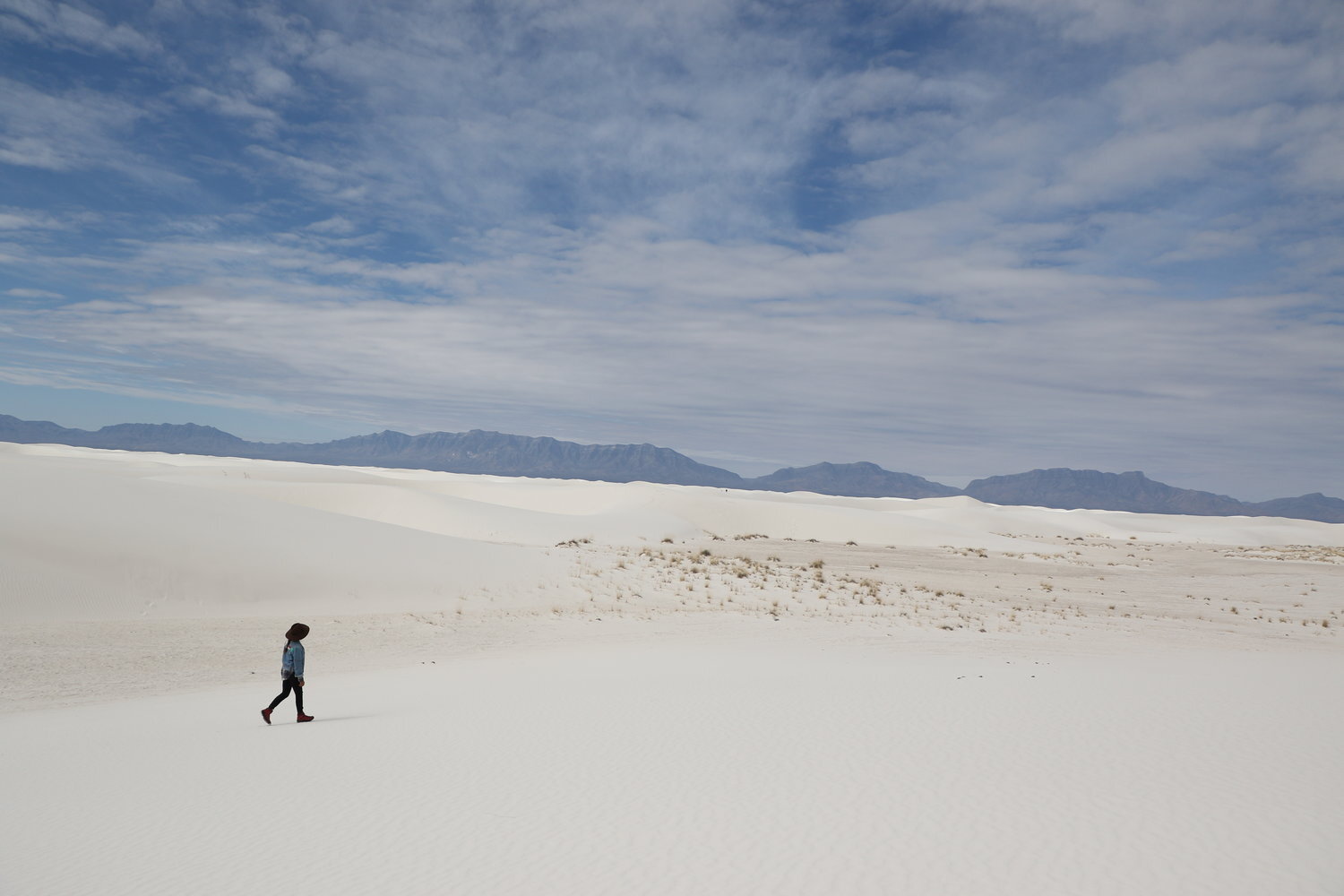
Me, White Sands National Monument, New Mexico(All photos taken with my Canon EOS 7D Mark II)

Me, White Sands National Monument, New Mexico

(All photos taken with my Canon EOS 7D Mark II)

Boketto is a Japanese noun that means: “blank stare” or “gazing vacantly into the distance without really thinking about anything specific.”

Fossilized reef mountains, Guadalupe Mountains National Park, West Texas

Fossilized reef mountains, Guadalupe Mountains National Park, West Texas

Last week, I reconnected with this beautiful world in which we live. I had the great fortune to take a road trip through two national parks - Big Bend and Guadalupe Mountains National Park, and one national monument - White Sands. I gazed vacantly at a lot of splendid natural things for long periods of time. My week-long digital detox helped immensely to allow the sun-soaked arid rawness of the Southwestern desert and mountains seep into my bones. I am learning that periods of downtime like this reawaken the bedrock of our humanness.

Bendy road, Big Bend

Bendy road, Big Bend

Cloud-gazing. ✓

Star-bathing. ✓

Otherworldly landscapes. ✓

Respite. ✓

Roadrunner buddy, Big Bend National Park

Roadrunner buddy, Big Bend National Park

What I learned this week:

voyaging + digital detox = vacation

digital detox + time in nature = aliveness and awe

time in nature + stillness = reflection

stillness + sleep = rest

sleep + seeing = dreaming

seeing + looking = perception

looking + gazing = boketto

boketto + clouds/stars/landscapes = quiet mind.

Prickly pear, Big Bend National Park

Prickly pear, Big Bend National Park

I am utterly grateful that the National Park Service exists. There are 58 national parks in America. I prefer to visit the overlooked ones, which tend to be less populated oases, overflowing with majestic beauty rather than people. But, really, any will do. Try one out! And remember, we can keep them protected with our votes.

Marfa, Texas

Marfa, Texas

Finally, Stephen Hawking once said: “Remember to look up at the stars and not down at your feet. Try to make sense of what you see and wonder about what makes the universe exist. Be curious. And however difficult life may seem, there is always something you can do and succeed at. It matters that you don't just give up.”

Yes, Dr. Hawking, yes! May you R. I. P. ♡

The Year of Yes is a weekly photo-and-word installment by Dr. Shah written with the purpose of evoking hope, resilience, and a gentle movement toward healthy change in all of us.